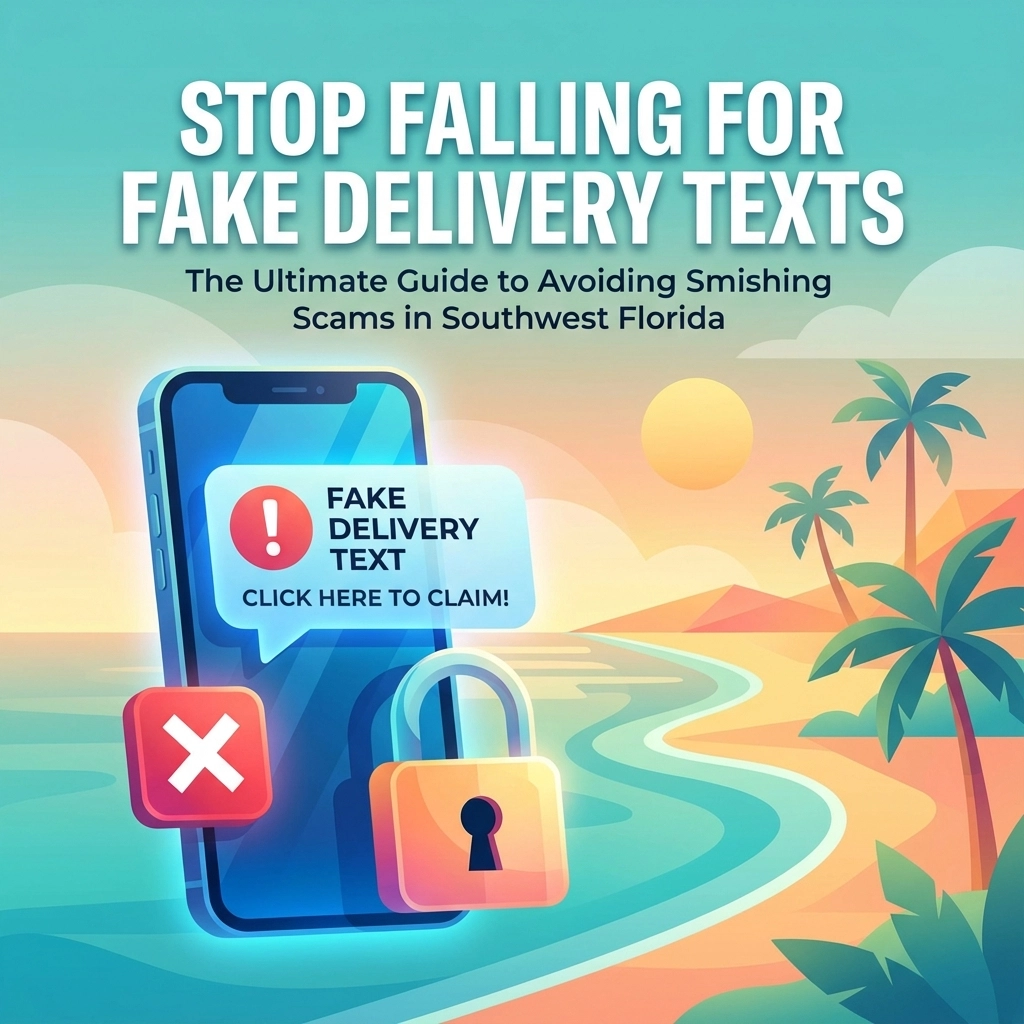

Another day, another round of fake delivery texts hitting Southwest Florida! If you've been getting suspicious messages about packages you never ordered, delivery attempts that seem fishy, or urgent notifications demanding immediate action, you're not alone. These "smishing" scams (SMS + phishing = smishing) are exploding across Venice, Sarasota, and the entire Southwest Florida region.
Truthfully, these scammers are getting more sophisticated every day. They're no longer sending obviously fake messages with terrible grammar. Today's fake delivery texts look incredibly convincing, complete with legitimate-looking tracking numbers, professional formatting, and even spoofed phone numbers that appear to come from real delivery companies.
The Growing Threat in Southwest Florida
Southwest Florida has become a prime target for these scams, and there's a good reason why. Our region has a higher concentration of retirees and seasonal residents who frequently shop online and expect regular deliveries. Scammers know this and specifically target our area codes and zip codes with convincing fake delivery notifications.

The Florida Department of Transportation recently issued warnings about similar text-based scams targeting SunPass users, but delivery scams are far more common and potentially more damaging. Unlike toll-related scams that might cost you a few dollars, fake delivery scams often lead to identity theft, credit card fraud, and even complete financial account takeovers.
What These Scams Actually Look Like
Modern fake delivery texts are surprisingly convincing. Here's what you might see:
Common fake delivery scenarios:
- "Your package has been delayed due to an incorrect address. Click here to update your delivery information."
- "We attempted delivery but no one was home. Reschedule your delivery by confirming your details."
- "Your package is being held at our facility. Pay a small redelivery fee to receive your item."
- "Suspicious activity detected on your delivery. Verify your identity to prevent package theft."
These messages often include realistic tracking numbers, official-looking logos, and professional language that mirrors legitimate delivery notifications from FedEx, UPS, USPS, and Amazon.
The Red Flags Every Southwest Florida Resident Should Know
Unexpected urgency is the biggest warning sign. Legitimate delivery companies don't threaten to return packages within hours or demand immediate payment for redelivery. If a text message creates a sense of panic or urgency, that's your first red flag.
Suspicious phone numbers are another dead giveaway. Real delivery companies send notifications from consistent, recognizable numbers. If you're getting delivery texts from random phone numbers or numbers that change frequently, be suspicious.

Requests for personal information should immediately raise alarms. Legitimate delivery companies already have your address and contact information. They'll never ask you to "verify" your Social Security number, credit card details, or full address via text message.
Generic greetings are common in fake texts. Instead of addressing you by name (which real companies do), scam texts often say "Dear Customer" or "Valued Customer."
Shortened or suspicious links are major red flags. Legitimate companies use their official domain names in communications. If you see bit.ly links, random strings of numbers and letters, or domains that don't match the supposed sender, don't click.
How These Scams Actually Work
Understanding the scammer's playbook helps you stay protected. Here's their typical process:
Step 1: The Hook – You receive a convincing text about a package issue that requires your immediate attention.
Step 2: The Redirect – Clicking the link takes you to a fake website that looks exactly like the real company's site.
Step 3: The Data Harvest – The fake site asks you to "verify" your information, including addresses, phone numbers, email addresses, and sometimes credit card information.
Step 4: The Exploitation – Scammers use your information for identity theft, unauthorized purchases, or sell your data to other criminals.
Unfortunately, many victims don't realize they've been scammed until they see unauthorized charges on their credit cards or notice suspicious activity in their accounts weeks later.
Your Defense Strategy Against Smishing Scams
Never click links in unexpected delivery texts. If you're genuinely expecting a package and receive a concerning notification, go directly to the delivery company's official website or app. Don't use any links from the text message.
Verify through official channels. If you're unsure about a delivery notification, call the delivery company directly using the phone number from their official website. Have your tracking number ready if you have one.

Keep your devices updated. Modern smartphones have built-in security features that can help detect and block suspicious messages, but only if your software is current.
Set up account alerts. Most major delivery companies offer email and app notifications for deliveries. If you have these set up, you shouldn't need to rely on text messages for delivery information.
Trust your instincts. If something feels wrong about a delivery notification, it probably is. Legitimate companies understand that customers might be skeptical and won't pressure you into immediate action.
What to Do If You've Been Targeted
If you clicked a suspicious link or provided information to a fake delivery site, don't panic, but act quickly:
Secure your accounts immediately. Change passwords for any accounts that might have been compromised, starting with your email, banking, and major shopping accounts.
Contact your bank and credit card companies. Let them know you may have been targeted by a scam. They can monitor your accounts for suspicious activity and issue new cards if necessary.
Monitor your credit reports. You're entitled to free credit reports from all three major bureaus annually. Consider setting up credit monitoring if you haven't already.
Report the scam. Forward the suspicious text to 7726 (SPAM) to help your wireless provider block similar messages. Also report it to the Federal Trade Commission at ReportFraud.ftc.gov.

The Bigger Picture for Southwest Florida
These delivery scams are just one piece of a much larger cybersecurity puzzle affecting our region. As our community becomes increasingly digital-first, especially post-COVID, we're seeing more sophisticated attacks targeting everything from personal devices to local businesses.
Business owners need to understand that employee education about these scams is crucial. One employee falling for a fake delivery scam could potentially compromise your entire business network if they use the same passwords or access company systems from personal devices.
How Computers Done Right Protects Southwest Florida
We've been helping Venice and surrounding communities stay secure for years, and we're seeing these smishing attacks become more frequent and more convincing. The good news? We can help you build multiple layers of protection.
Our cybersecurity services include comprehensive security assessments that examine not just your devices, but your digital habits and vulnerabilities. We help you set up proper email filtering, secure your devices against malicious apps and websites, and create backup systems that protect you even if you do fall victim to a scam.

We also provide ongoing education and support because cybersecurity isn't a one-time fix – it's an ongoing process that requires staying current with new threats and protection strategies.
Your Next Steps
Don't wait until you're the next victim of a sophisticated smishing scam. These attacks are only getting more convincing, and the consequences of falling for one can be devastating.
Start by implementing the protection strategies we've outlined today. Delete any suspicious delivery texts you've received recently, verify your current account security settings, and make sure your devices have the latest security updates.
If you want a comprehensive security assessment of your current protection level, we're offering FREE cybersecurity consultations for Southwest Florida residents. We'll review your devices, check for existing vulnerabilities, and provide personalized recommendations for staying protected.
Contact Computers Done Right today to schedule your free assessment. Visit our services page or call us directly. Because when it comes to protecting yourself from increasingly sophisticated scams, having expert guidance isn't just helpful – it's essential.
Remember, the scammers are counting on you to act quickly without thinking. Take the time to verify, question suspicious messages, and protect yourself properly. Your future self will thank you.